Born Into Protection: How New Southeast Asian Immigrant Mothers Can Shield Their Newborns Before the First Vaccine
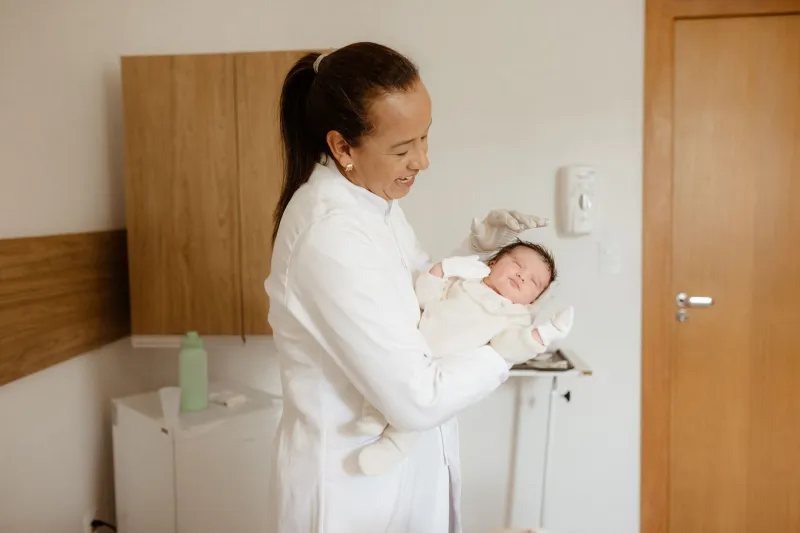
A newborn's immune system is a work in progress. In the earliest weeks of life, before the pediatrician administers the first round of scheduled vaccines, an infant relies almost entirely on defenses borrowed from its mother. This biological arrangement — elegant in design, but limited in scope — means that a mother's vaccination history is not just her own concern. It is, in a very real sense, her child's first line of defense.
For Southeast Asian immigrant mothers giving birth in the United States, this reality arrives alongside a cascade of other adjustments: a new healthcare system, unfamiliar postpartum customs, and often the absence of extended family who might otherwise provide both practical support and generational health knowledge. Understanding how maternal immunity works — and what steps can be taken before and during pregnancy — gives new mothers one more powerful tool in an already demanding season of life.
How Maternal Antibodies Reach Your Baby
During the third trimester of pregnancy, a mother's body actively transfers immunoglobulin G (IgG) antibodies across the placenta to the developing fetus. These antibodies are the product of every infection a mother has survived and every vaccine she has ever received. They do not last forever — most begin to wane by the time an infant reaches four to six months of age — but during those first critical months, they provide meaningful protection against several serious diseases.
Breastfeeding extends this transfer in a different form. Breast milk, particularly the colostrum produced in the first days after birth, is rich in secretory IgA antibodies that coat the infant's mucosal surfaces, offering localized protection in the gut and respiratory tract. This is not a substitute for vaccination, but it does complement the protection already passed through the placenta.
The critical takeaway: the strength of this borrowed immunity depends directly on the strength of the mother's own immune responses. A mother with robust, up-to-date immunity passes a richer antibody profile to her infant than one with significant gaps in her vaccination history.
Vaccines That Matter Most Before and During Pregnancy
For Southeast Asian immigrant mothers, vaccination history can be inconsistent for reasons that have nothing to do with personal choice. Childhood immunization records may be incomplete, lost during migration, or based on schedules that differed from current US recommendations. Some vaccines routinely administered in the United States were not part of standard programs in certain Southeast Asian countries a generation ago.
Three vaccines deserve particular attention in the context of pregnancy and newborn protection.
Tdap (Tetanus, Diphtheria, and Pertussis): The US Centers for Disease Control and Prevention (CDC) recommends that pregnant women receive the Tdap vaccine between 27 and 36 weeks of each pregnancy, ideally earlier in that window. Pertussis — commonly known as whooping cough — can be fatal in newborns too young to have received their own vaccines. Maternal Tdap vaccination stimulates high levels of pertussis antibodies that transfer efficiently to the fetus before birth. This is one of the most well-supported strategies in perinatal immunization.
Influenza: Seasonal flu vaccination is recommended throughout pregnancy, regardless of trimester. Pregnant women face elevated risk of severe influenza complications, and the antibodies generated by maternal vaccination cross the placenta to protect newborns during their first months of life — a period when infants cannot yet receive the flu vaccine themselves.
COVID-19: Updated guidance from the CDC supports COVID-19 vaccination during pregnancy. Evidence suggests that vaccinated pregnant women pass protective antibodies to their infants, and the risk of severe illness during pregnancy from COVID-19 remains a legitimate clinical concern.
For mothers who were not vaccinated during pregnancy, postpartum vaccination is still valuable — both to protect future pregnancies and to reduce the risk of the mother transmitting vaccine-preventable illnesses to her newborn during close contact in the early weeks.
Navigating Two Philosophies of Care
One of the quieter challenges facing Southeast Asian immigrant mothers in the US is the experience of receiving care from providers who do not always communicate with each other. An obstetrician manages prenatal and postpartum health. A pediatrician takes over the infant's care almost immediately after birth. These two physicians may operate within the same hospital network — or they may not — and their approach to discussing vaccines with immigrant families can vary considerably.
Some obstetricians proactively raise the topic of prenatal Tdap and flu vaccination during routine prenatal appointments. Others do not, particularly in practices where the patient volume is high and language barriers exist. Pediatricians, meanwhile, typically assume that prenatal vaccinations were handled by the obstetric team and may not revisit the subject unless a parent raises it directly.
This coordination gap places an undue burden on new mothers who are already managing the demands of a new country, a new pregnancy, and — soon — a newborn. Advocacy, however imperfect, remains one of the most effective tools available. Bringing a written list of questions to prenatal appointments, asking specifically whether all recommended pregnancy vaccines have been administered, and requesting documentation of vaccines given during pregnancy to share with the pediatrician are practical steps that can close this gap.
Community health centers and federally qualified health centers (FQHCs) that serve immigrant populations often have staff who speak Southeast Asian languages and are familiar with the specific vaccination histories — and gaps — common among patients from the region. These centers can be valuable partners in building a complete immunization record before and after delivery.
Cultural Context and the Postpartum Period
Many Southeast Asian cultural traditions observe a structured postpartum confinement period — known by various names across Filipino, Vietnamese, Indonesian, and other communities — during which new mothers rest, follow specific dietary practices, and limit outside contact. These traditions carry genuine wisdom about recovery and bonding, and they need not conflict with vaccination planning.
In fact, the relative seclusion of the postpartum period can reduce an infant's exposure to circulating pathogens during the weeks before their first vaccines. However, it also means that well-meaning family visitors — grandparents, aunts, uncles — may be in close contact with a newborn without anyone verifying their own immunity status. Ensuring that household members and frequent visitors are current on Tdap, influenza, and other relevant vaccines before the baby arrives is a strategy that extends the protective circle beyond the mother alone.
This concept — sometimes called cocooning — is not about restricting family involvement. It is about ensuring that the people closest to a newborn are not inadvertently carrying illnesses that a baby cannot yet defend against.
Starting the Conversation Early
The most effective time to address prenatal vaccination is before pregnancy, during preconception care. For women who are planning a pregnancy, a preconception appointment is an opportunity to review the full vaccination history, receive any vaccines that are safe before pregnancy (such as MMR and varicella, which cannot be given during pregnancy), and establish a plan for vaccines to be administered during the gestational period.
For women who are already pregnant or who have recently delivered, the window has not closed. Postpartum vaccination can still protect future pregnancies and reduce transmission risk in the immediate newborn period. The conversation is worth having at every appointment, even if it has been overlooked before.
A newborn cannot ask for protection. But a well-informed mother — one who understands how her own immune history shapes her child's earliest defenses — can provide it before her baby ever receives a single vaccine.