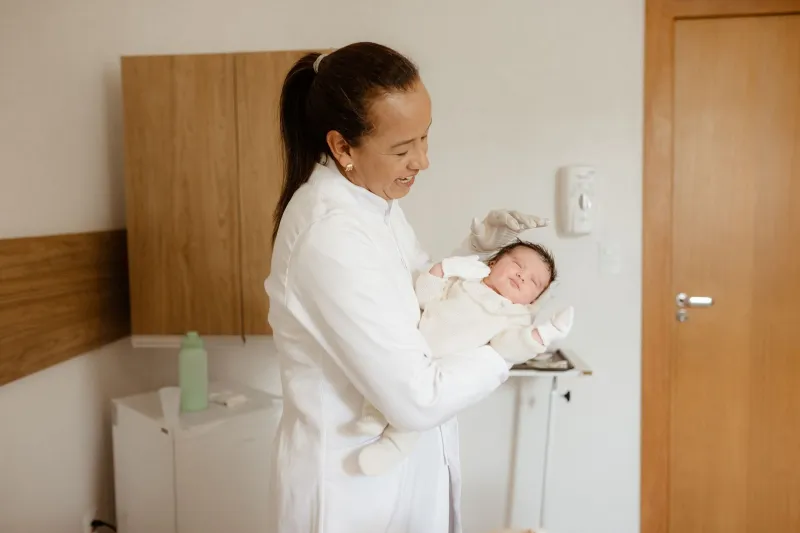
Healthy and Contagious: How Fully Vaccinated Adults Can Unknowingly Endanger the Youngest Members of a Multigenerational Home

There is a deeply uncomfortable truth embedded in modern immunology: vaccination does not always prevent infection. It prevents illness — or, more precisely, it dramatically reduces the severity of illness in the vaccinated person. But a vaccinated adult whose immune system has successfully suppressed the worst symptoms of a pathogen may still harbor and transmit that pathogen to someone whose immune system cannot fight back at all.
For families living in multigenerational homes — a household structure that is not only common but often celebrated in Southeast Asian communities across the United States — this distinction carries life-or-death weight. A grandmother who recovered from a mild cough, a father who pushed through what felt like seasonal allergies, a teenage sibling who never felt sick at all: any one of them could be the source of a devastating infection for a newborn sleeping in the next room.
Understanding how this happens, and which diseases are most likely to travel this invisible route, is one of the most important pieces of health literacy a family can develop.
What "Breakthrough Infection" Actually Means
A breakthrough infection occurs when a vaccinated individual becomes infected with a pathogen their vaccine was designed to protect against. This does not mean the vaccine failed. In most cases, the immune response generated by vaccination is precisely what prevents a mild infection from becoming a severe one. The vaccinated person may experience no symptoms, minimal symptoms, or a shorter and less intense illness than an unvaccinated person would.
The problem is that "no symptoms" does not mean "not contagious." The pathogen is still present in the respiratory tract, in saliva, on skin surfaces — and it can still be expelled through a cough, a sneeze, a breath, or simple physical contact.
For a healthy adult, this is manageable. For a two-week-old infant whose immune system is still developing, or for an elderly grandparent undergoing chemotherapy, it can be catastrophic.
The Three Diseases Families Should Understand First
Pertussis (Whooping Cough)
Pertussis is perhaps the most well-documented example of asymptomatic transmission from vaccinated adults to vulnerable infants. The Tdap vaccine provides strong protection against severe disease but does not create lasting sterilizing immunity — meaning vaccinated individuals can still become infected and infectious, often without the dramatic "whoop" that makes the disease recognizable in unvaccinated children.
Studies have consistently identified vaccinated parents and older siblings as the primary source of pertussis transmission to newborns too young to be vaccinated. In the United States, pertussis remains endemic, with periodic outbreaks affecting all states. Infants under two months of age face the highest risk of hospitalization and death.
For Southeast Asian families in the US who may have grandparents visiting from abroad — or who have recently welcomed extended family members whose vaccination histories are incomplete or unknown — this risk is compounded significantly.
Measles
Measles is one of the most contagious infectious diseases known to medicine. While the MMR vaccine offers high-level protection, immunity can wane over time, and some vaccinated individuals — particularly those who received only one dose of the older vaccine formulations used in parts of Southeast Asia decades ago — may have lower antibody levels than they realize.
A vaccinated adult with waning immunity who is exposed to measles during a community outbreak may develop a modified, attenuated form of the illness with few recognizable symptoms. Yet they can still shed the virus during the prodromal phase, before any rash appears, placing unvaccinated infants and immunocompromised household members at risk.
This is particularly relevant for families who have recently returned from international travel, or who have received visitors from countries where measles transmission is more active.
Respiratory Syncytial Virus (RSV)
RSV deserves special attention because it is not a disease most adults think about seriously. For healthy adults and older children, RSV causes symptoms indistinguishable from a common cold — a runny nose, mild congestion, perhaps a low-grade fever. Recovery is swift and unremarkable.
For infants under six months of age, RSV is the leading cause of hospitalization in the United States. Bronchiolitis caused by RSV can be severe and, in some cases, fatal. There is no vaccine currently approved for infants themselves, though maternal RSV vaccination during pregnancy and a preventive monoclonal antibody called nirsevimab are now available options that families should discuss with their healthcare providers.
In a multigenerational household, an adult who dismisses their "mild cold" as not worth mentioning may unknowingly be the vector that sends a newborn to the intensive care unit.
Why Multigenerational Households Face Elevated Risk
The structure of many Southeast Asian families in the US — where grandparents, parents, and young children share bedrooms, kitchens, and daily routines in close proximity — creates a transmission environment that is fundamentally different from nuclear family households. Physical affection is abundant and meaningful. Shared caregiving is the norm, not the exception. Grandparents and extended family members often serve as primary caregivers during the critical early weeks of a newborn's life.
This closeness is a profound strength. It is also a transmission pathway.
Additionally, family members who have immigrated from Southeast Asia may carry vaccination histories that reflect the schedules and vaccine formulations of their countries of origin, which may differ from US standards in terms of timing, dosage, or the specific strains covered. A family member who believes they are fully protected may have immunity gaps they are unaware of.
A Practical Framework for Protecting the Most Vulnerable
Recognizing this risk does not require alarm — it requires planning. Several evidence-based strategies can significantly reduce the likelihood of asymptomatic transmission within the home.
Cocooning. The cocooning strategy involves ensuring that everyone who will have close contact with a newborn — parents, siblings, grandparents, and any regular caregivers — receives relevant booster vaccinations before the baby arrives. For pertussis specifically, Tdap is recommended for all close contacts who have not received a dose in the past decade.
Maternal vaccination during pregnancy. Vaccinating the mother during pregnancy against pertussis (Tdap), influenza, and RSV allows protective antibodies to transfer to the infant before birth, providing a bridge of immunity during the period when the infant is most vulnerable.
Symptom vigilance without self-dismissal. Vaccinated adults who develop any respiratory symptoms — even mild ones — should take those symptoms seriously when a newborn or immunocompromised person is in the home. Masking, hand hygiene, and temporarily reducing close contact are not overreactions; they are responsible caregiving.
Healthcare provider consultation. Families expecting a new baby should have a direct conversation with their pediatrician and their own primary care providers about the vaccination status of every household member. This includes family members visiting from abroad, whose records should be reviewed and gaps addressed before arrival.
The Invisible Carrier Is Not the Enemy — Ignorance Is
It would be a mistake to read this article as an indictment of vaccination or of the vaccinated adults who love their families deeply. Vaccines are among the most effective public health tools ever developed, and a vaccinated household is significantly safer than an unvaccinated one.
But protection is not binary. The goal is not simply to vaccinate individuals — it is to build immunity environments that shelter those who cannot yet protect themselves. In a multigenerational Southeast Asian household, that means every adult, every grandparent, every older sibling understands their role in that environment.
A healthy adult who feels fine is not automatically a safe contact for a three-week-old infant. Knowing this — and acting on it — is what transforms good intentions into genuine protection.